How to Calculate UX Design ROI for Your Business Website
Understanding UX Design Business Value and ROI
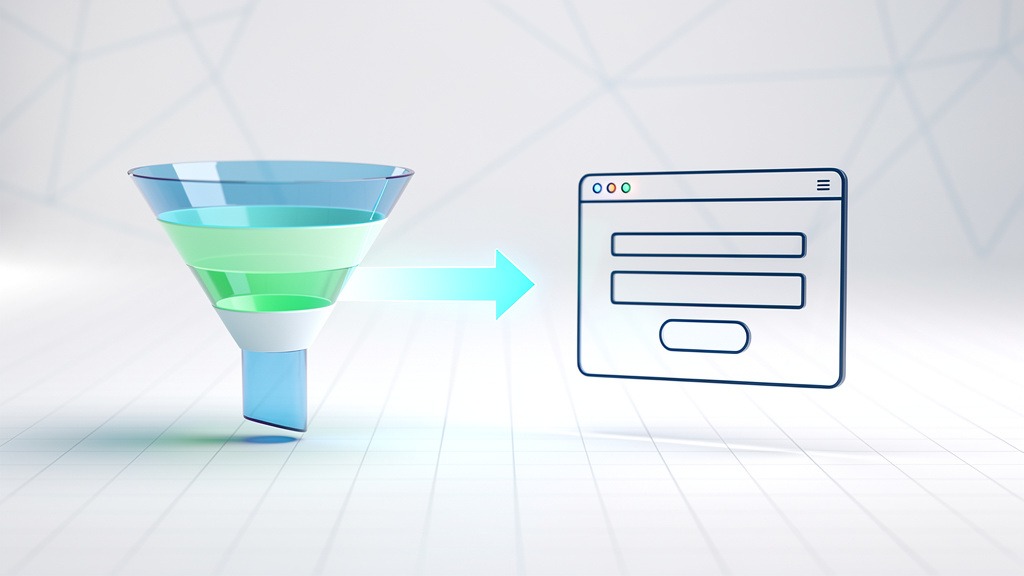
Look, here's what nobody tells you about UX design ROI: it's the relationship between measurable business outcomes and what you actually spent making your user experience better. When UX design creates real business value, you'll see it happen when design decisions remove friction, build confidence, and help people complete those high-intent actions on your website.
Why does ROI matter? Because it transforms design from endless subjective debates into a shared language that management, product teams, and developers can all understand.
What UX design ROI actually means in business terms
Return on investment? It's simply the value you gained compared to what you invested. For UX design, "value" might include revenue lift, reduced support load, fewer errors, faster task completion, or lower rework in IT product development. The key is making sure the outcome is measurable in your specific context.
"Investment" should include the full UX effort—not just screens and prototypes. Count research time, requirements collection, idea generation workshops, testing, and all the design team's work that helps development build the right thing with fewer surprises.
Core components to measure
A practical UX ROI model has three parts:
- Baseline: current performance before changes (conversion, drop-off, error rates, support tickets, time on task)
- Change: the UX design intervention inside a design framework, plus what actually shipped in development
- Business impact: the delta you can attribute, with assumptions documented and reviewed
Workflow hint: assign ownership early. Product management often owns the business metric, UX owns the research and testing plan, and engineering confirms what can be instrumented.
Where the Double Diamond methodology fits
The Double Diamond methodology separates problem discovery from solution delivery, which protects ROI by preventing premature build decisions. The trade-off? Time upfront. The payoff? Fewer late-stage reversals when testing reveals misunderstood user needs.
Quick example: if testing shows users can't find pricing, a navigation change may outperform a redesign of the entire page.
Now that we've established the foundational understanding of UX ROI, let's explore the practical steps to calculate it for your website.
Calculating Your Website Usability ROI Step by Step
Website usability ROI is a structured way to translate UX design improvements into financial return, compared against the total cost of creating those improvements. Use website usability ROI when leadership needs a clear business case for UX research, idea generation, testing, and development changes.

The goal isn't perfection—it's a defensible calculation that management can revisit as the IT product evolves.
Define what counts as return and what counts as investment
Return is the measurable business value created by a more seamless, intuitive experience. Common return categories include:
- Revenue lift (more completed purchases, more qualified leads)
- Cost reduction (fewer support contacts, less rework during development)
- Risk reduction (fewer usability failures discovered late)
Investment is the full cost required to produce the change, not just interface design time:
- UX design and research time, including requirements collection and synthesis
- The design team's work on flows, content structure, and interaction design
- Engineering and QA effort in IT product development
- Testing costs, including participant recruitment and analysis time
Practical constraint: if investment excludes development or QA, ROI will look inflated and won't survive a budget review.
Calculate website usability ROI with a repeatable design framework
- Choose one decision and one outcome to measure. Example: improving checkout clarity to increase completed checkouts.
- Set a baseline period and a measurement period. Keep periods comparable (same traffic sources and seasonality where possible).
- Pick a small set of user experience metrics tied to the outcome. Examples include completion rate, conversion rate, time on task, error rate, or drop-off points.
- Connect the metric change to money. Translate outcomes into revenue gained or costs avoided, using your internal numbers (average order value, lead value, support cost per ticket).
- Total the investment cost. Include UX design, management time, requirements collection, development, and testing.
- Apply the ROI formula. ROI = (Net benefit ÷ Investment) × 100, where net benefit = total benefits minus total costs.
- Document assumptions and isolate the cause. Note what else changed (pricing, campaigns, backend performance) so stakeholders understand confidence level.
Map the steps to the Double Diamond methodology
Use the Double Diamond as a design framework to keep ROI work credible:
- Discover and Define: baseline, requirements collection, and hypothesis selection
- Develop and Deliver: idea generation, prototyping, testing, and handoff to development
Trade-off: tighter measurement increases confidence but can slow delivery, so agree up front which assumptions are acceptable for this release.
While calculating ROI is vital, understanding the common pitfalls can help you avoid misinterpretations and maximize your UX investment.
Common Mistakes in Measuring UX Investment Return
Measuring UX investment return often fails for one reason: teams try to prove value with vague stories or isolated metrics that don't connect to revenue, cost, or risk. The fix isn't more reporting—it's clearer definitions, tighter attribution, and shared ownership across design, management, and delivery.
Mistake One: Treating UX outputs as business outcomes
Wireframes, journeys, and polished UI are deliverables, not results. When management asks for ROI, the question is whether the experience changes user behavior in a way that supports business value.
Prevention strategies:
- Define the target behavior in plain language before idea generation (for example, "complete checkout" or "submit lead form").
- Tie each UX design change to a measurable user experience metric and a financial proxy (revenue gained, support time reduced, rework avoided).
- Separate assumptions from evidence, especially when explaining business value of UX design to a client.
Mistake Two: Measuring at the wrong stage of the Double Diamond
The Double Diamond is a design framework that moves from discovery to definition, then development and testing. A common failure is judging ROI during requirements collection, before the team has validated the problem or tested solutions.
Trade-off to acknowledge: deeper discovery can delay build start, but skipping discovery often increases downstream change requests during IT product development.
Workflow hint: assign one owner for measurement planning (often product or analytics), and one owner for UX testing and insight synthesis (often UX lead). Shared ownership prevents "nobody owns the numbers."
Mistake Three: Overstating attribution and ignoring hidden costs
ROI math breaks when teams credit UX for every improvement, or ignore the full cost of implementation.
Use this quick checklist:
- Confirm what changed in development, content, and UX design, not just UI.
- Document dependencies, such as new tracking, QA, and stakeholder reviews.
- Run testing that matches the real decision point, not a lab-perfect task.
- Report caveats, especially where seasonality or parallel campaigns may influence results.
Beyond the numbers, a holistic view of user experience is crucial, which brings us to the key metrics that truly reflect customer satisfaction and engagement.
Key User Experience Metrics for Business Impact
The fastest way to prove UX design business value? Track a small set of user experience metrics that connect behavior, outcomes, and operational cost. When teams measure what users feel, do, and complete, management can make confident decisions about requirements collection, development scope, and what to test next.

Metrics that translate experience into business value
Use a balanced scorecard, not a single number, to measure impact of UX design across the full journey:
- Conversion metrics: form completion rate, checkout completion rate, lead submission rate
- Friction metrics: task success rate, time on task, error rate, drop off at key steps
- Engagement metrics: return visits, feature adoption, content depth (pages or steps per session)
- Quality metrics: support ticket volume for a flow, refund or cancellation reasons, bug reports tied to usability
- Sentiment metrics: post-task confidence, satisfaction, perceived effort
How to map metrics to the Double Diamond design framework
A practical mapping keeps the design team's work measurable without slowing IT product development.
- Discover and Define: capture baseline friction points during requirements collection, align on 1 to 3 primary outcomes
- Develop: connect idea generation to a hypothesis for one metric change
- Deliver: validate in testing, then monitor the same metrics after release to confirm real-world lift
Ownership, trade offs, and what can go wrong
Assign one owner per metric, often product or management for outcome metrics and UX for research instrumentation. The trade off is focus versus coverage: too many metrics create noise, too few can hide UX design neglected outcomes like reduced support burden or fewer errors.
To further address specific concerns, let's dive into some frequently asked questions about UX design ROI.
Frequently Asked Questions About UX Design ROI
Is a 3% ROI good and what does a 20% ROI mean
A 3% ROI can be good if the UX work is low-risk, fast to deliver, and improves a strategic journey that compounds over time. A 20% ROI usually means the net benefit is 20% higher than the investment over the period you measured, but the time window and confidence level matter as much as the percentage.
- Use ROI percentages alongside payback period, not in isolation.
- Compare ROI to alternative uses of budget (marketing, performance, sales enablement).
- Confirm the baseline is stable, otherwise the "before" number may be misleading.
Quick example: If testing reveals a checkout confusion that causes abandonment, a small fix might produce a modest ROI that still wins because it's predictable and quick to validate.
Is a 50% ROI good and is 7% return on investment realistic
A 50% ROI can be excellent when attribution is credible and the change is durable, not a temporary spike. A 7% return on investment can be realistic for return on investment UX design when the work focuses on clear friction points, but results vary by traffic quality, funnel maturity, and implementation quality.
- Validate attribution: isolate the UX change from pricing, campaigns, and seasonality.
- Watch for trade-offs: a lift in conversion can reduce lead quality if the experience over-promises.
- Assign ownership: product management typically owns the KPI definition, UX owns hypothesis and testing, development owns instrumentation and release quality.
What is the ROI of a website in business terms
Website ROI is the financial impact of the site compared to the total cost to build, run, and evolve it. UX design drives ROI by shaping a seamless, intuitive path from intent to completion inside an IT product, not by aesthetics alone.
- Revenue impact: leads, signups, purchases, upgrades.
- Cost impact: fewer support contacts, fewer failed tasks, less rework in development.
- Risk impact: fewer errors in critical flows, clearer expectations and consent.
This is where conversion rate optimization ROI becomes measurable, because improvements are tied to completed actions, not opinions.
How do we gather data to support UX statements without slowing development
Use a design framework like the Double Diamond to time research and testing so it informs requirements collection early, then validates decisions continuously. The goal is data to support UX statements that management can trust without pausing delivery.
- Start with one business question and one user action to improve.
- Instrument the journey before changing it, so "before" and "after" are comparable.
- Run lightweight testing on prototypes during idea generation, then again after release.
- Review results in a shared cadence with UX, product, and development.
In summary, understanding and calculating UX design ROI is a powerful tool for any business.
Key Takeaways for Maximizing UX Investment Return
Maximizing UX investment return starts with treating UX design as a measurable growth engine, not a creative expense. When teams connect UX design business value to user experience metrics, leadership can defend budgets, prioritize the roadmap, and forecast website usability ROI and conversion rate optimization ROI with confidence.
Tie experience to outcomes
Use a small, consistent scorecard that management reviews monthly. Assign one owner for measurement so the design team's work doesn't drift away from real business value.
Use a repeatable delivery rhythm
Run discovery and delivery through the Double Diamond methodology and a clear design framework: requirements collection, idea generation, testing, then development. This structure keeps the IT product focused and accelerates IT product development without skipping critical learning.
Protect the return with smart constraints
Over-research can delay development, under-testing can ship costly rework. Set decision deadlines, and test the riskiest assumptions first.
Continue to refine your UX strategy to unlock even greater returns.