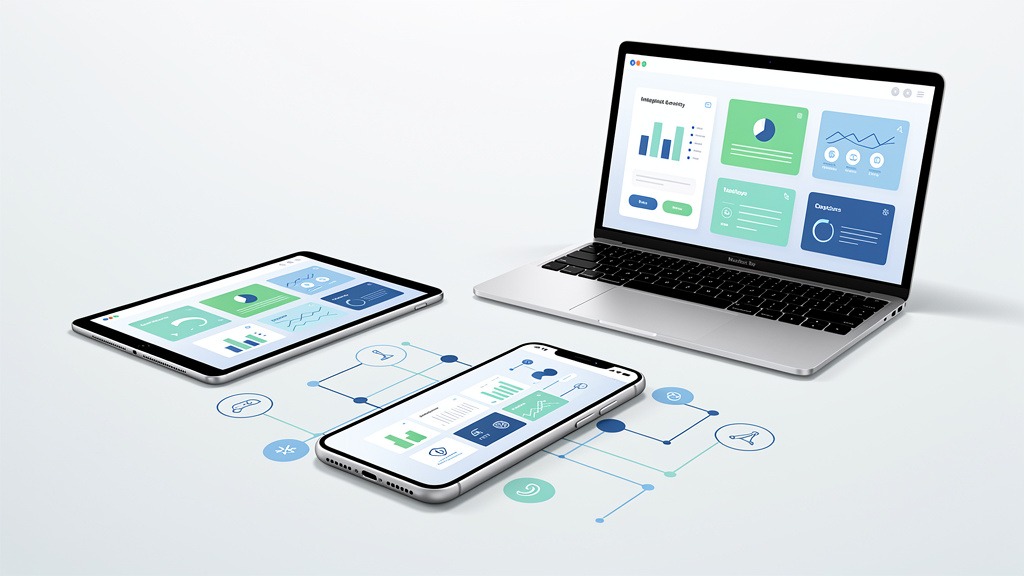
Web Design Case Studies That Transformed Business Results
Think of a web design case study as your project's biography – it tells the complete story from that first awkward client meeting to the final victory lap. But here's the thing: it's not about showing off pretty screenshots. The real magic happens when you demonstrate how smart design choices actually solved messy, real-world business problems.
Unlike those portfolio tiles that just scream "look how beautiful this is!" a case study digs deeper. It connects the dots between what you designed and why it mattered to the bottom line. We're talking about improved user experience that translates into actual business results.
What Makes a Case Study Different From a Portfolio Entry
Most web design portfolios? They're basically Instagram for designers. Pretty homepage, snappy caption, done.
A case study tells a different story entirely. It documents the journey, the decisions, the "oh crap, that didn't work" moments, and ultimately, the wins.
You'll want to include assets that make your story believable:
- Crisp visuals that actually show the work: screenshots, responsive mockups, different UI states
- Links to the live site (when the client's cool with it)
- Real numbers that matter: lead increases, conversion bumps, fewer angry support tickets
Reality check: Sometimes attribution gets messy. Maybe they launched a new ad campaign the same week. Or changed their pricing. Call that stuff out instead of taking credit for everything under the sun.
Key Components to Include From Kickoff to Launch
Here's your roadmap for building a story that decision-makers will actually trust:

- Project overview and client goals: What did success look like? Why did it matter?
- Challenges and roadblocks: What was killing their conversions or confusing users?
- User research and audience deep-dive: Who are these people, what do they want, where do they bail out?
- Wireframing and prototyping phases: How information flows, user journeys, interaction concepts
- Design process and actual solutions: Maybe you used color and typography to create clearer hierarchy, or added subtle motion graphics to guide attention without being annoying
- User testing and feedback cycles: What you tested, what broke, what you learned
- Results that matter: Measurable outcomes using whatever tracking method the client actually cares about
- Honest lessons learned: What you'd do again, what you'd change
Trade-off worth noting: This level of documentation takes time. But it's what transforms a pretty website into credible proof that design drives conversions.
Examples That Show Diverse Goals and Industries
A strong collection spans different business needs. You might showcase smart websites like the Flamingo Website, Cinq Music Website for a full-stack music company, Pushka Game Development for a game development studio, DLS Website Design in the wellness and healthcare space, or a travel tracker application focused on keeping users engaged and the product clear.
Each story should demonstrate how your team crafted something that feels intuitive and emotionally engaging, then tied those outcomes back to business impact that actually mattered.
Now that we've covered what makes a case study tick, let's talk about how these stories translate into cold, hard business benefits.
ROI in Web Design and What It Actually Measures
ROI in web design boils down to this: what percentage return did a business get from their website investment compared to what they spent? In the real world, ROI connects your design decisions to results that matter – more qualified leads, higher online revenue, fewer support headaches, better customer retention.

The trick is defining "return" before you start designing. For a wellness and healthcare site, success might mean appointment bookings. For a travel tracker app, you're probably looking at trial-to-paid conversions or reduced churn rates.
Key Metrics to Track for Credible Web Design ROI
Pick a small set of metrics that actually match what the website needs to accomplish. Then stick with them consistently before and after launch.
- Conversion rates: purchases, lead forms, demo requests, newsletter signups
- Organic traffic: search visits to the pages that matter most
- Engagement depth: time spent on key pages, how far people scroll, repeat visits
- Revenue directly tied to the site: ecommerce sales, qualified pipeline, subscription growth
- Efficiency indicators: support ticket volume, checkout abandonment issues, sales team time spent
Workflow tip: Marketing usually owns traffic and conversion data. Sales teams know lead quality. Product or customer experience teams track engagement signals. Get these folks aligned early so ROI doesn't turn into a blame game later.
How to Calculate ROI for a Redesign or New Build
Use a straightforward formula and keep your assumptions transparent.
- Define your "return" in actual dollars (monthly or quarterly), tied to one or two main conversion actions
- Establish baseline performance before launch and a comparable period after
- Be conservative about what gains you can actually attribute to the redesign, especially if marketing campaigns changed simultaneously
- Apply the formula: ROI % = (Return − Cost) ÷ Cost × 100
Example percentages for context: 0% ROI means you broke even – the project paid for itself but didn't generate extra profit. 100% ROI means you generated returns equal to the full project cost on top of recovering your investment. Higher percentages can signal a strong redesign, but double-check your attribution.
Design Process Choices That Most Influence ROI
Many successful website redesigns come from disciplined discovery work, not last-minute visual polish. User research and audience analysis reveal what people actually want, what scares them off, and what triggers action. Wireframing and prototyping let you validate navigation, content hierarchy, and conversion paths before developers write a single line of code. User testing and feedback loops confirm that users notice your calls to action, understand your value proposition, and can move through the experience without friction.
In practice, strong ROI examples often show up in projects like Flamingo Website or DLS Website Design when improvements in color and typography reduce confusion, and motion graphics guide attention without slowing things down. For brands like Cinq Music Website, a full-stack music company might prioritize clearer artist discovery and signup flows. Meanwhile, Pushka Game Development, a game development studio, might focus on trailer placement, site performance, and community capture.
Understanding ROI mechanics is just the beginning. The real power lies in showing how web design actively creates these impressive returns.
A killer web design case study tells a guided story that proves business impact through clear decisions, trackable outputs, and measurable outcomes when you've got them. The goal isn't visual wow factor alone – it's making website redesign success stories easy to understand, validate, and imagine applying to similar businesses. The strongest narratives position design as strategic leverage, then show the work and the outcome in language anyone can follow.
Lead With the Outcome and the Human Stakes
Open with a quick "result snapshot" that identifies the audience, the friction they faced, and the change you set out to create. This is where business website transformations become tangible, because readers can feel the tension between where the brand was stuck and where it needed to go.
Use language that connects experience to business intent:
- "Visitors couldn't figure out pricing or next steps"
- "The brand needed to build trust in the competitive wellness and healthcare space"
- "A game development studio needed more immersive presentation without killing site performance"
Then set your promise: what the redesign would make easier, faster, or more confident for both users and stakeholders.
Step-by-Step Structure for a Credible Case Study
Use this repeatable template to present work clearly and earn trust from decision-makers who care about efficiency, cost control, and quality outcomes.
- Client and context: Define the business type and constraints (timeline, approval processes, legacy platform issues, content readiness)
- Goal definition: State the primary business goal and the supporting user goal in one sentence each
- Baseline signals: Describe what was happening before, using observable indicators (drop-off points, confusion areas, sales friction). Avoid making up numbers
- Insight and strategy: Explain the "why" behind your approach (information architecture, messaging hierarchy, conversion path design)
- Key design decisions: Show 3 to 5 choices with clear rationale, such as improved color and typography for better readability, or motion graphics used strategically to direct attention
- Build and handoff: Note what you delivered (design system, component library, CMS patterns) and who owned what (designer, developer, client team)
- Results and learnings: Present outcomes as verified client results. Use metrics only when the client can back them up, otherwise report outcomes as qualitative feedback, operational improvements, or observed behavior changes
Make Proof Easy to Audit and Reuse
A beautiful case study can still feel sketchy if readers can't trace your claims back to actual artifacts. Include scannable evidence: annotated wireframes, a clear sitemap, content examples, and before-and-after screens with captions explaining what changed and why.
Add quick example blocks to help readers pattern-match without overstating facts: a Flamingo Website refresh might highlight clarity and contrast for accessibility, a Cinq Music Website for a full-stack music company could focus on release discovery and talent signup flows, a Pushka Game Development concept might emphasize immersive motion graphics with performance safeguards, and a DLS Website Design for a travel tracker application could showcase onboarding and retention journeys.
While presenting success stories is crucial, it's equally important to sidestep common pitfalls that can torpedo the credibility and effectiveness of your case studies.
The biggest portfolio problem isn't design quality – it's storytelling quality. A strong case study should read like a decision trail across a complete UI/UX design project, connecting strategy to outcomes with solid proof. When that narrative falls apart, even gorgeous work struggles to earn trust or generate meaningful ROI examples.
Mistake 1: Treating a Case Study Like a Single Portfolio Tile
A portfolio entry shows outcomes. A case study explains causality. When you jump straight to glossy mockups, decision-makers can't see the problem-solving behind the visuals, or how you balanced business goals with user experience needs.
Fix: Start with Project Overview and Client Goals, then clearly name the Challenges and Problems in plain language. If the work supports digital marketing and online presence, state what needed improvement (lead quality, discoverability, message clarity) before showing any layouts.
Mistake 2: Skipping Results or Using Vague Wins
"Improved engagement" isn't a result anyone can validate. Case studies that dodge quantifiable data also fail to teach readers what they should measure next time.
Fix: Add a Results section with before and after metrics the client actually tracks, plus measurement notes. Use specific categories like conversions, qualified inquiries, task completion, or support deflection, even when exact numbers can't be shared. Include Lessons Learned so readers understand trade-offs and what actually moved the needle.
Mistake 3: Hiding the Design Process Behind Pretty Pictures
Over-focusing on visuals often erases the work that reduces risk: user research and audience analysis, wireframing and prototyping stages, and user testing and feedback loops. Even smart choices like color and typography improvements or motion graphics feel random without clear rationale.
Fix checklist for a credible narrative:
- State audience insights and research inputs, even if lightweight
- Show 1 to 2 wireframes and what they validated
- Describe the prototype feedback loop and what got revised
- Explain the solution, not just the screens, including constraints and ownership (who approved, who built it)
- Tie each decision to a metric, creating web design ROI examples without exaggeration
Projects like Flamingo Website, Cinq Music Website for a full-stack music company, Pushka Game Development for a game development studio, DLS Website Design in the wellness and healthcare space, or a travel tracker application can all succeed brilliantly – but only if the story connects intent, process, and proof.
With a clear grasp of best practices and common errors, let's dive into specific examples that show the power of web design in achieving different business objectives.
A portfolio earns trust when it demonstrates how design choices create measurable outcomes, not just attractive screens. The strongest business website transformations read like clear, comparable design case studies, where each project ties user experience decisions to revenue, leads, or operational efficiency.
ROI Definition and How to Measure Client Results From Redesigns
ROI in web design represents the percentage return a business gains from a new build or redesign compared to the total project cost. In portfolio context, ROI makes the connection between measurable results and business goals explicit and trackable.
Key metrics to monitor during and after launch:
- Conversion rates: lead form submissions, purchases, demo bookings
- Organic traffic: search visibility and qualified visitor growth
- Engagement time: duration on key pages, scroll depth analysis
- Revenue growth: online sales or pipeline attributed to web leads
How to calculate ROI for website projects:
- ROI % = ((Return − Cost) ÷ Cost) × 100
- "Return" can be incremental profit, qualified lead value, or cost savings (fewer support tickets, for example), depending on business goals
Examples of ROI percentages, framed as interpretation guidelines (not industry benchmarks):
- ROI above 0% means the website returned more value than it cost
- ROI around 100% means the return roughly doubled the investment (the project paid back its cost once over)
- ROI well above 100% signals compounding gains, often from stronger conversion rates plus sustained organic traffic growth
Portfolio Example Patterns and What They Signal to Decision Makers
A web design case study for the Flamingo Website might spotlight emotional clarity for the wellness and healthcare space, using intentional color and typography to reduce decision fatigue and improve appointment booking intent.
For the Cinq Music Website, a full-stack music company often benefits from motion graphics used with restraint – adding energy while keeping navigation intuitive for artists, industry partners, and press contacts.
For Pushka Game Development, a game development studio portfolio example can emphasize immersive visuals balanced with technical performance, so cinematic presentation doesn't sabotage load speed or user engagement.
A DLS Website Design entry works well when it makes the "why" visible, such as restructuring service offerings to match audience expectations and removing friction from the inquiry process.
A travel tracker application story can highlight product-focused UX, where onboarding sequences and habit loops shape retention and repeat engagement patterns.
The Process Behind Results and What Can Go Wrong
Reliable outcomes usually start with user research and audience analysis, then move into wireframing and prototyping to test structure before polishing visuals. User testing and feedback loops should continue through iterations, with a clear owner for decisions (often a product lead or marketing lead).
Trade-off to watch: richer motion graphics can deepen emotional connection, but excessive animation can distract users or hurt performance, which can actually depress conversion rates.
Beyond these examples, many common questions come up when considering the value and impact of web design work.
A web design case study is a structured, evidence-focused story that explains how a website project moved from a real business problem to a measurable outcome. Unlike a visual portfolio tile, a case study makes decision-making visible, so readers can understand why the work looks and behaves the way it does. A strong case study earns trust by connecting design choices to web design client results, such as clearer lead quality, faster user journeys, or fewer support requests.
Definition You Can Copy Into a Brief
A web design case study is a documented project narrative that includes the client context, goals, constraints, process, key design decisions, and outcomes. The core job of a case study is to prove strategic thinking, not to showcase aesthetics in isolation.
The Essential Components of a Credible Case Study
Use this checklist to keep the story scannable and citation-ready:
- Context: industry and audience, for example the wellness and healthcare space
- Objective: what needed to change and what success looked like
- Constraints: budget, timeline, platform limitations, approval processes, compliance requirements
- Decisions: information architecture, UX flows, color and typography choices, accessibility considerations, content strategy
- Build details: responsive behavior, performance priorities, and when motion graphics supported the message
- Proof: what you measured and how you interpreted the outcome, clearly labeled as observation versus conclusion
Practical Notes on Proof and Trust
A useful trade-off to acknowledge: bold visuals can increase emotional connection, but heavy media can hurt performance if not optimized properly. What can go wrong is vague reporting, so assign ownership early. Designers typically own intent and rationale, while analytics or growth teams often own tracking and measurement definitions.
Quick Example Titles That Set Expectations
A portfolio can signal relevance with clear, specific naming, such as Flamingo Website for a travel tracker application, Cinq Music Website for a full-stack music company, Pushka Game Development for a game development studio, or DLS Website Design for a service brand.
Next, we'll tackle the most common questions decision-makers ask about web design success stories.
What Is a Case Study in Web Design
A case study in web design is a structured story of decisions and outcomes, explaining how a website moved from a business problem to measurable impact. The best web design case studies show strategy, constraints, and proof – not just polished screens.
- Key inclusions: context, audience, goals, approach, deliverables, learnings, outcomes
- Proof types: before and after user journeys, analytics snapshots, sales or lead quality notes, stakeholder quotes
- Common format: problem → insight → solution → validation → web design client results
Caveat: outcomes should be attributed carefully, because traffic changes, seasonality, or ad spend shifts can distort the story.
Quick example: A portfolio narrative can reference projects like the Flamingo Website or DLS Website Design without over-claiming, by describing what changed in information architecture, content hierarchy, and conversion flow design.
Can ChatGPT Write a Case Study and What Should Humans Own
ChatGPT can draft a case study structure, but humans must supply the evidence, the constraints, and the final accountability. Use AI for organization and clarity, not for inventing outcomes or inflating website redesign success stories.
- AI can help: outlining sections, turning notes into readable narrative, creating multiple headline options
- Humans must own: data accuracy, client approvals, and the "why" behind decisions
- Workflow hint: assign ownership to a designer or PM for narrative development, and to an analyst or stakeholder for verification
Trade-off: faster writing versus higher risk of vague claims. A case study is persuasive when it's specific, not when it's dramatic.
What Is ROI in Web Design and How Do You Measure It Credibly
ROI in web design is the return a business gains from a website investment compared to project cost, measured against agreed business goals. Credible web design ROI examples connect design changes to one or two primary KPIs, then validate with tracking and testing.
- Process (practical, repeatable): user research and audience analysis to define intent and objections, wireframing and prototyping to test structure before visuals, then user testing and feedback loops to refine navigation, messaging, and forms
- What can go wrong: measuring too early, changing multiple variables simultaneously, or ignoring offline conversions
Quick example: For a full-stack music company like Cinq Music Website, ROI may focus on qualified inquiries and artist sign-ups, while a travel tracker application may prioritize user activation and retention metrics.
What Are the 7 Cs and the 5 Golden Rules of Web Design
There isn't one universal "7 C's" or "5 golden rules" list, but teams use these frameworks to keep work consistent and purposeful. A practical interpretation supports business website transformations and stronger web design portfolio examples.
- 7 Cs you can apply: clarity, content, context, consistency, credibility, conversion, continuous improvement
- 5 golden rules you can use: design for the audience, prioritize accessibility, create visual hierarchy with color and typography, keep navigation predictable, validate with testing
Optional example: A game development studio like Pushka Game Development may lean into motion graphics for emotion and energy, while work in the wellness and healthcare space may prioritize calm pacing, trust signals, and readability.
To recap, understanding and effectively showcasing web design's impact is essential for demonstrating real value.
Business growth becomes easier to defend when web design case studies connect design decisions to measurable outcomes and explain the trade-offs behind them. The most persuasive stories translate visuals into operational value, so stakeholders can see why a redesign earned attention, trust, and action.
Turn Stories Into Proof Decision-Makers Can Reuse
Treat case studies as structured evidence, not marketing fluff. Strong web design portfolio examples make website redesign success stories credible by showing constraints, choices, and what actually changed for users and internal teams.
- Lead with the business goal, then the user problem, then the design response
- Document outcomes as web design client results, even when results are qualitative
- Include before and after user journeys to make business website transformations easy to grasp
- Add one clear learning to support future web design ROI examples
Make the Process Visible From Research to Iteration
Effective teams start with user research and audience analysis to clarify intent, objections, and success criteria. Next, wireframing and prototyping reduce risk by testing structure before polish. Finally, user testing and feedback loops validate navigation, messaging, and accessibility, so improvements reflect real behavior, not internal preferences.
Anchor Abstract Principles With Recognizable Project Types
A portfolio can show range without inventing outcomes. Projects like Flamingo Website, Cinq Music Website for a full-stack music company, Pushka Game Development as a game development studio, DLS Website Design in the wellness and healthcare space, and a travel tracker application can highlight effective color and typography choices, motion graphics, and purposeful interaction patterns.
Ready to transform business results through impactful web design that actually works?