Webflow vs WordPress Component Systems for Business Websites
Understanding Webflow and WordPress Core Philosophies
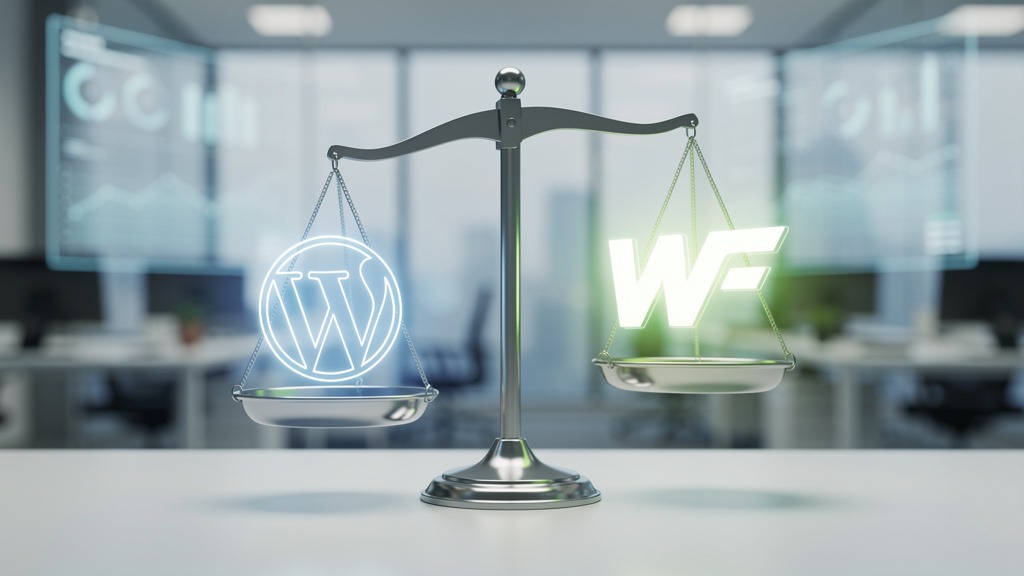
Both Webflow and WordPress tackle the same challenge: creating websites that actually convert visitors into customers. But here's where it gets interesting – they approach this goal from completely different angles. Rather than arguing about which platform has "superior features," the real question becomes: which philosophy matches how your team actually works?
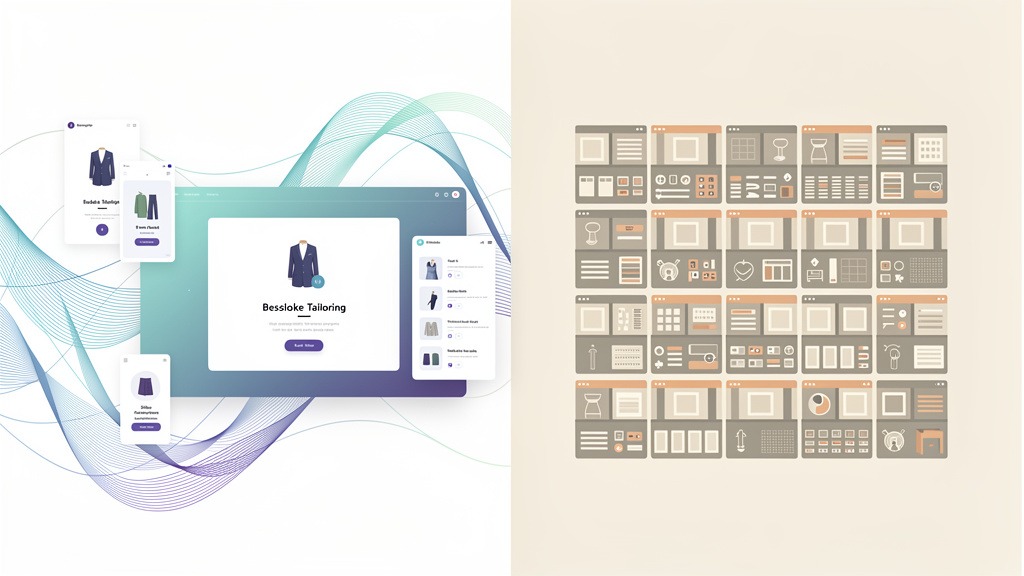
Webflow's approach: visual-first design systems with guardrails
Webflow operates as both a CMS and website builder that treats every pixel like it matters. Teams often describe working in Webflow as "designing with intention" – the interface practically forces you to think about spacing, typography, and reusable elements before connecting them to your content.
Here's how Webflow Components actually work: They're building blocks you can drop anywhere, nest inside each other, and tweak with something called overrides – basically controlled ways to customize without breaking the whole system. Nesting means you can put components inside other components, which sounds simple but creates incredibly modular designs.
The catch? Someone needs to own the component strategy. Without clear rules about overrides, teams accidentally create seventeen slightly different hero sections. Not ideal.
WordPress takes a different route: flexible content blocks
WordPress started as a CMS and evolved into something that can function like a website builder when you use blocks properly. The whole system revolves around content: you're essentially assembling pages from individual pieces, then extending functionality through plugins and themes when you need more power.
WordPress Blocks and Block Patterns work like this: Blocks are individual content pieces – think headings, images, buttons – that you arrange in the editor. Block Patterns are pre-made combinations of blocks that speed up page creation while keeping things somewhat consistent.
The trade-off? All that flexibility can feel overwhelming. Your editing experience depends heavily on which themes and plugins you've chosen, and governance becomes your responsibility.
How this plays out for real teams
- Making global changes: Webflow Components typically update everywhere at once (with optional tweaks per page), while WordPress often relies on copying and adapting patterns across pages.
- Non-technical team experience: WordPress feels familiar because blocks map to content concepts most people understand. Webflow clicks for design-minded folks because everything relates to visual hierarchy.
- Clean code and performance: Honestly depends on how much stuff you pile on. More complexity usually means more problems, regardless of platform.
Quick reality check for your decision:
- Who's responsible for design consistency – your design team or content team?
- Do your marketers need safe, guided editing or complete creative control?
- Will you rely heavily on plugins and themes, or prefer a tighter native system?
Now that we've covered the philosophical differences, let's examine how their component systems actually function.
Webflow Components Versus WordPress Blocks and Patterns
For business websites, the component comparison really boils down to this: how reliably can your team create, reuse, and update design elements without accidentally breaking your brand? Webflow components prioritize design-system consistency within a visual environment. WordPress uses a block editor where you assemble content from individual pieces, often extending capabilities through plugins and themes.

How Webflow Components actually behave
Webflow Components are reusable design chunks – navigation bars, hero sections, pricing cards, footers – built to work across multiple pages and nest inside each other. The nesting part matters because you can build "systems within systems." Picture a page template component containing section components, which contain smaller UI components.
Overrides let you make controlled tweaks to specific instances without rebuilding the entire structure. This means one page can adjust content or styling within defined boundaries. In practice, this creates design freedom with built-in guardrails: designers define what's customizable, content teams edit safely within those limits.
Workflow tip: assign one person to own component architecture (usually design or front-end), and someone else to handle content updates (typically marketing). This separation prevents accidental changes that mess up your system.
WordPress Blocks and Block Patterns in action
WordPress Blocks are individual building units used in the block editor – headings, images, buttons, layout elements. You drag and drop these into pages and posts to build your content.
Block Patterns are pre-designed block layouts that give teams a structured starting point for customization. Patterns speed up production, but many teams still depend on plugins and themes for advanced blocks, styling options, and templates. This can increase coordination overhead.
The reality? WordPress feels more open-ended, which can be liberating or chaotic depending on whether you enforce design standards.
Reuse, updates, and what it means for performance
This is where Webflow and WordPress feel most different day-to-day. Webflow encourages global thinking: build once, use everywhere, update confidently. WordPress can support similar approaches, but teams often end up with "almost identical but not quite" sections unless someone actively maintains standards.
Performance and code quality? Situational. More plugins and custom block combinations can add complexity, while a disciplined component library keeps output predictable. For SEO, security, and conversion optimization, consistent governance usually matters more than any individual feature.
| What you're deciding | Webflow Components | WordPress Blocks and Patterns |
|---|---|---|
| --- | --- | --- |
| Main building block | Reusable Components | Blocks, enhanced by Block Patterns |
| Customization approach | Instance overrides within set boundaries | Per-block editing, pattern customization |
| Design system scaling | Strong consistency emphasis | Depends on editor rules and theme configuration |
| Non-technical editing | Safe edits when overrides are well-planned | Familiar editor experience, potential layout drift |
| What adds complexity | Component strategy and permissions | Plugins, themes, and block variations |
This comparison often comes down to whether your team prefers structure over flexibility, and how much technical ownership you want to handle internally.
Understanding the broader ecosystem becomes crucial once you move beyond core component features.
Ecosystem Comparison: Plugins, Integrations, and Customization
Component systems rarely fail because of editor limitations – they succeed or fail based on the ecosystem supporting them. Webflow and WordPress both extend far beyond their core website builder features, but with different trade-offs around customization, security, and ongoing maintenance.
What extensibility actually means for each platform
Webflow operates as a managed SaaS platform. Extensions typically come through Webflow Apps, embedded scripts, and third-party integrations when native features aren't enough. The upside is control: teams can craft immersive, on-brand experiences without managing tons of moving parts.
WordPress is open-source and functions like a website builder when combined with the right themes, blocks, and page-building plugins. The strategic advantage is range: open source plus plugins unlock almost any functionality you can imagine, from complex SEO workflows to custom content types. But governance becomes part of your job.
Decision framework for business teams:
- Choose managed ecosystems when consistency and controlled updates matter most.
- Choose open ecosystems when unique requirements or deep customization matter most.
Apps and integrations versus plugins and themes
WordPress shines in breadth. The plugin repository is massive, and the commercial market adds even more options. This gives teams multiple ways to extend components, but also increases the surface area for compatibility issues, updates, and security concerns. Workflow tip: assign one person to handle plugin selection, updates, and rollback plans – not your content team.
Webflow's strength is focus and predictability. Webflow Apps feel more curated, and advanced workflows often connect through third-party tools like Zapier. The trade-off is clear: fewer extension paths than open source, but typically less maintenance complexity for non-developers.
Business comparison at a glance
| Category | Webflow | WordPress |
|---|---|---|
| --- | --- | --- |
| Platform model | Managed SaaS CMS and website builder | Open-source CMS |
| How you extend it | Apps, embeds, integrations | Plugins, themes, custom code |
| Customization depth | Strong visual control, selective coding | Extremely broad, often more coding options |
| Integration approach | Usually via third parties like Zapier | Often through plugins and APIs |
| Security and maintenance | Fewer third-party components to manage | More third-party components to vet and update |
| Cost predictability | Subscription pricing varies by plan | Hosting and plugin costs vary significantly |
Your choice between these platforms often depends on specific business priorities and team capabilities.
Webflow vs WordPress: Who Wins in Which Business Scenario
This platform comparison comes down to how your team wants to control components over time: centralized design governance through a visual builder, or flexible assembly in a plugin-driven CMS. Webflow typically wins when brand consistency and design control must stay tightly managed across all pages. WordPress typically wins when businesses need extensive integrations, editorial workflows, and multiple ways to extend functionality.

Pick Webflow for brand-focused sites with tight design control
Use Webflow when your website experience must feel intentionally crafted on every single page, with minimal visual variance. Webflow suits teams wanting drag-and-drop building with clear designer ownership, while still supporting CMS-driven content.
Typical scenarios where Webflow excels:
- Marketing and brand sites where visual consistency directly impacts performance
- Startups iterating landing pages rapidly without waiting for development cycles
- Teams preferring fewer moving parts, adding apps selectively
Constraint to consider: Webflow limitations often surface when businesses need highly specific third-party functionality only available through certain plugins, or when internal teams expect deep server-side control. These situations may require custom development or external tools, affecting cost and timelines.
Pick WordPress for extensibility and complex content operations
Use WordPress when your business prioritizes flexibility, broad compatibility, and mature publishing workflows. Many teams value WordPress strengths like a vast ecosystem of plugins and themes, plus familiar roles allowing marketing, editors, and developers to work in parallel.
Typical scenarios where WordPress excels:
- Content-heavy publishing where multiple authors manage structured content
- Businesses relying on specialized plugins for SEO, security, or e-commerce
- Organizations with in-house development wanting granular control over code and infrastructure
What can go wrong: plugin sprawl complicates updates, performance, and security ownership. Assign a clear "platform owner" to approve plugins, manage updates, and document component guidelines.
Decision table by business scenario
| Business requirement | Webflow fits better when | WordPress fits better when |
|---|---|---|
| --- | --- | --- |
| Design control with brand consistency | Design system consistency outweighs endless extension options | Multiple themes or varied layouts across teams are acceptable |
| Page iteration speed | Designers own components and publish independently | Teams rely on plugin-based page building with development support |
| Integrations and functionality | Focused set of apps covers requirements | Plugins are the primary path for new capabilities |
| Governance and risk management | Fewer dependencies are preferred | Defined maintenance process exists for updates and security |
Understanding potential challenges with both platforms is equally important for making an informed decision.
Navigating Common Challenges with Webflow and WordPress
Both Webflow and WordPress can create memorable, conversion-ready experiences, but each has predictable failure modes. The fastest path to a stable component system is treating your CMS and website builder as a product requiring governance, not a one-time build. This section covers the most common pitfalls and practical moves that keep design freedom, SEO, and security aligned with business goals.
Challenge One: Design freedom that gradually undermines brand consistency
In visual, drag-and-drop workflows, speed can morph into inconsistency when teams duplicate elements instead of reusing approved components. In WordPress builds, similar drift happens when editors mix blocks, patterns, and plugin widgets never designed to coexist.
Component governance checklist:
- Define "approved components" with clear naming (specify who owns updates – design or engineering)
- Create rules for variations (example: one hero component, three approved layouts)
- Establish review processes before publishing (especially homepage, pricing, landing pages)
- Document when custom coding is allowed versus staying within the editor
Challenge Two: Extensions and the hidden maintenance burden
WordPress flexibility often comes from plugins, creating real WordPress downsides: compatibility conflicts, inconsistent CMS interfaces, and larger security surfaces to monitor. Webflow typically extends through apps and custom embeds, which can be cleaner but still introduces dependency risk if an app becomes critical for publishing or forms.
Risk mitigation for both platforms:
- Inventory every plugin or app, marking "mission-critical" items (forms, search, SEO, analytics)
- Assign specific ownership for updates and incidents – not "the team" generally
- Establish staging workflows to test changes before production
- Remove unused extensions aggressively – unused code still creates risk
Challenge Three: Cost and workflow surprises with real teams
Platform choice rarely fails on features – it fails on operations: who can safely edit, how approvals happen, and how much specialized help is needed. Costs vary based on tooling, scope, and agency or freelancer rates, especially when custom coding is required to match precise design systems.
Example: A startup running frequent campaigns can maintain momentum by limiting editors to a curated component library, then scheduling monthly technical reviews for SEO and security.
Let's address some frequently asked questions to clarify common concerns about these platforms.
Direct Comparison of Component Systems
What component systems mean in daily practice
For Webflow versus WordPress components, the core issue is governance: who controls reusable building blocks and how safely teams can update them within a CMS. This component comparison matters because component drift quietly damages design consistency, SEO performance, and security posture as more pages and editors get involved.
Side-by-side comparison you can actually use
Webflow generally favors a centrally designed library within a visual website builder, where drag-and-drop editing stays close to the approved design system. WordPress generally favors flexible assembly, where blocks, themes, plugins, and apps often define the real "component layer," with coding expectations varying by stack and team.
Potential problem: without clear ownership, both approaches can produce nearly duplicate components, increasing maintenance costs and review time.
Quick decision framework for business teams
Use this platform comparison perspective when evaluating Webflow versus WordPress differences:
- Choose Webflow when brand layout must stay locked while editors move quickly
- Choose WordPress when you depend on specific plugins, integrations, or custom workflows
Real example
A SaaS marketing team might choose Webflow for controlled website builder features, while a content-heavy publisher might accept more coding complexity to extend WordPress capabilities.
Next, we'll examine the user experience for managing components.
User Experience for Managing Components
Non-technical teams feel the Webflow versus WordPress components difference most acutely when a marketer needs to ship updates quickly without sacrificing brand consistency. In daily work, this component comparison is about confidence: can someone use reusable parts, protect design integrity, and avoid surprise coding requirements or plugin conflicts?
Managing components in Webflow as a marketer
Webflow generally encourages a curated system where the CMS and website builder guide what can be edited. Marketers often work through drag-and-drop controls and pre-defined component settings, which can improve consistency and protect SEO-critical layouts. The trade-off is that advanced variations may still require coding by a designer or developer, depending on how the system was originally built.
Managing components in WordPress as a marketer
WordPress often feels like a flexible assembly environment: blocks, patterns, and plugins can extend WordPress functionality quickly. That flexibility can boost experimentation and conversion rates, but can also create decision fatigue if multiple editors or plugins define overlapping website builder features. This represents one of the most practical Webflow versus WordPress differences in real teams.
Practical checklist for safer updates
- Assign specific ownership for component governance within the CMS
- Document which plugins are approved to protect security and consistency
- Test updates affecting shared components before publishing
Let's answer the most common questions decision-makers ask about Webflow and WordPress.
Frequently Asked Questions About Webflow and WordPress
How do I choose between Webflow and WordPress for components
Q: What's the fastest way to decide in a Webflow versus WordPress components evaluation?
A: Start with governance. If your brand needs tightly controlled reuse and a highly curated visual system, prioritize Webflow. If your team needs maximum extensibility through plugins and varied editor setups, prioritize WordPress.
Key considerations:
- Who owns the component library – design, marketing, or engineering?
- How much design freedom is allowed before brand consistency breaks?
- How much ongoing maintenance can your business absorb?
This framing keeps the component comparison focused on how components stay consistent after launch, not how impressive the initial build looks.
How design freedom and coding differ in real projects
Q: What are the Webflow versus WordPress differences for non-developers?
A: Webflow generally emphasizes visual control, so teams often work in a drag-and-drop interface with built-in guardrails. WordPress can be equally visual, but design outcomes depend more on theme configuration, block setup, and plugin choices, so coding needs can appear unexpectedly.
Practical constraints:
- In WordPress, plugin combinations can introduce conflicts requiring developer time
- In Webflow, highly custom behavior may still require coding, even when layout is visual
Q: Is this a CMS comparison or a website builder comparison?
A: Both. Treat this as a workflow decision and a website builder decision, because components affect content, layout, and approval processes.
What about plugins, apps, SEO, and security
Q: Do plugins and apps change the component system decision?
A: Absolutely. WordPress functionality often expands through plugins, while Webflow functionality often expands through apps and platform-native capabilities. The trade-off is flexibility versus operational simplicity.
Q: Which is better for SEO and security?
A: Both can support strong SEO and security, but the risk profiles differ. In many WordPress builds, security and performance depend on theme and plugin choices, plus update discipline. In many Webflow builds, security responsibilities are more centralized, but teams must still manage publishing permissions and content governance.
How much does it cost
Q: Which platform has lower costs for a business site?
A: Costs vary based on hosting, paid plugins or apps, build complexity, and who maintains the system. For a business website platform comparison, estimate total cost of ownership, not just subscription fees.
Quick decision checklist: Define required website builder component features, list needed integrations, then choose the platform matching your team's skills and risk tolerance.
Making the right choice between Webflow and WordPress requires understanding your specific business context.
Final Thoughts on Choosing Your Business Website Platform
Choosing between Webflow and WordPress is really a decision about how your team wants to build, govern, and evolve reusable components. For Webflow versus WordPress components, the winning platform protects brand consistency while matching your team's appetite for coding, plugins, and ongoing change. Treat this decision as both a component comparison and a CMS evaluation, not a popularity contest.
Decision framework for Webflow versus WordPress differences
Webflow generally suits teams wanting a curated website builder experience with strong design control and visual, drag-and-drop assembly. WordPress suits teams expecting extensive functionality via plugins and third-party apps, even if component governance requires more structured processes.
Practical next steps for your platform comparison
- List must-have website builder component features for marketing, content, and brand teams
- Define ownership: who updates components, who approves changes, who handles security and SEO
- Estimate operating costs and effort for maintenance, integrations, and change requests
Important caveat and example
Costs and risks vary significantly by build quality and governance approach. For instance, a SaaS landing page system may prioritize consistent components, while a publisher may prioritize plugin breadth and editorial flexibility.
From here, your next step should be running a short proof of concept on both platforms with one real page and one reusable component.